Is Net Bag Packed Round Cabbage the Key to Better Product Visibility and Faster Turnover?
Those in the fresh produce business constantly face two challenges: making products stand out on crowded shelves and moving inventory quickly before spoilage.For round cabbage – a staple vegetable with high volume but low visual differentiation – packaging choices can directly influence how fast consumers pick it and how efficiently stores rotate their stock.
In recent years, Net Bag Packed Round Cabbage has gained attention not just as a protective layer, but as a strategic tool for enhancing product visibility and accelerating turnover rates. This article explores the practical benefits, technical specifications, and real-world applications of net bag packaging for round cabbage, drawing on insights from experienced agricultural operators.
Why Packaging Affects Both Visibility and Turnover?
Before examining net bag solutions, it helps to understand the link between packaging design and retail performance.
The Visibility Factor on Shelves
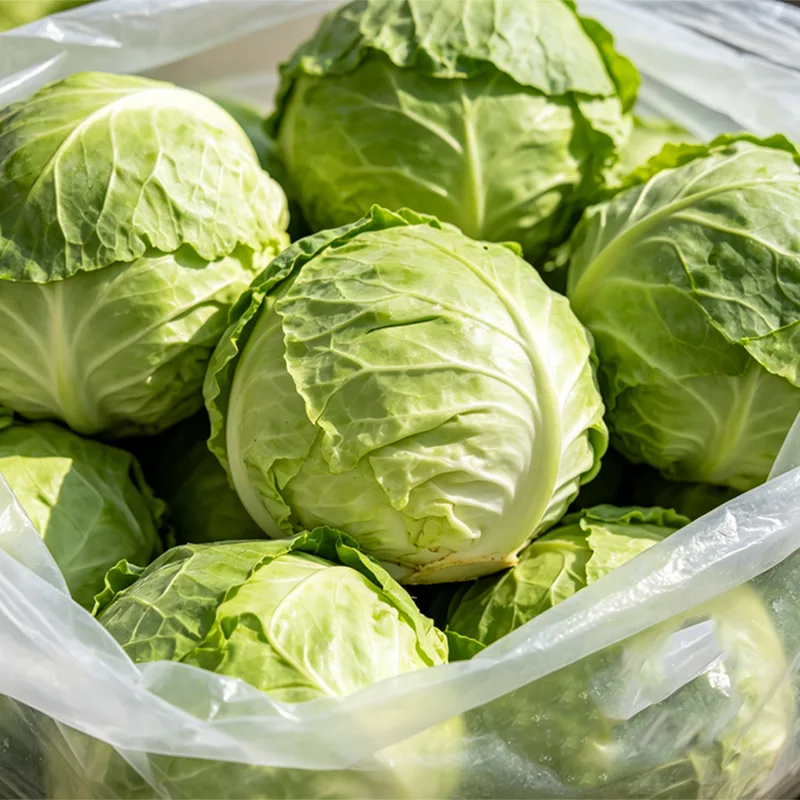
Round cabbage is naturally round, green or pale, and often blends in with neighbouring produce. When packed in solid plastic or left loose, cabbage heads can appear similar, forcing shoppers to handle each one – which slows down selection and increases bruising.
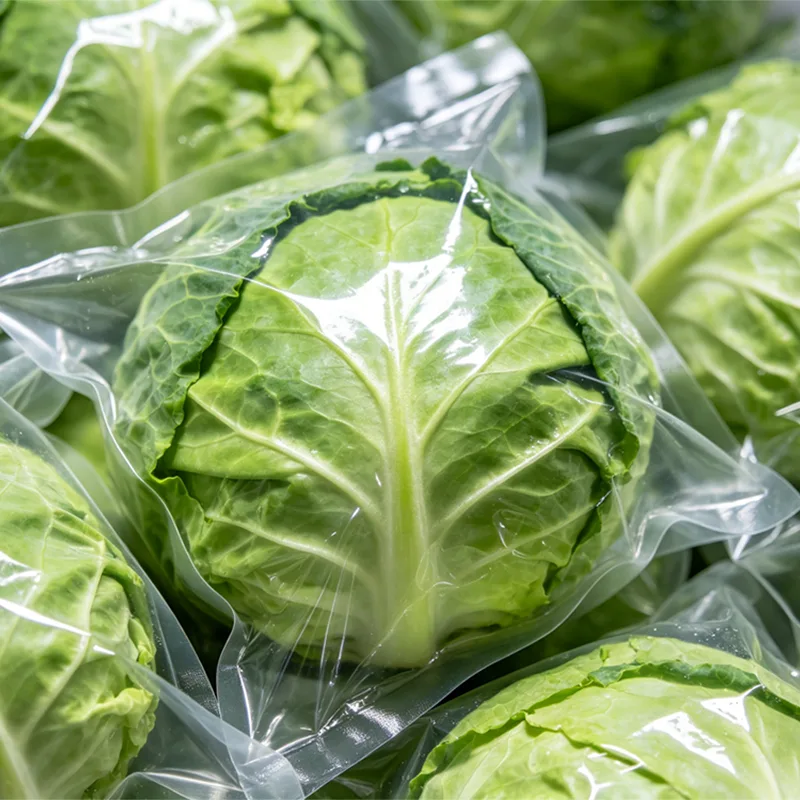
Net Bag Packed Round Cabbage solves this by:
- Allowing the cabbage’s natural colour and shape to show through
- Creating a uniform, stackable unit that catches the eye
- Enabling colour contrast (e.g., bright blue, green, or orange netting against white cabbage)
The Turnover Factor – Speed from Farm to Fork
Turnover measures how quickly a product sells and is replaced. For fresh cabbage, longer shelf life and easier handling mean faster restocking. Net bags provide:
- Air circulation that reduces moisture condensation
- Less handling damage compared to loose heads
- Barcode-ready labelling without extra wrapping
One study on produce packaging (references available from post-harvest research institutes) found that net-bagged vegetables showed 15–20% less waste during transport and 10% faster shelf turnover compared to bulk or solid-bag alternatives.
Comparing Packaging Types for Round Cabbage.
The table below summarises key differences between common cabbage packaging methods, based on industry feedback and logistics data.
| Packaging Type | Airflow | Bruising Protection | Visibility | Shelf Life (days, 4°C) | Restocking Efficiency |
|---|---|---|---|---|---|
| Loose / Bulk | High | Low (direct impact) | Poor | 12–18 | Low (needs sorting) |
| Solid poly bag | Very low | Medium (cushioned) | Poor (opaque) | 10–14 (condensation risk) | Medium |
| Net bag | High | Medium-High (bunched) | Excellent | 18–25 | High (ready to shelve) |
| Shrink wrap | None | High | Medium | 14–18 | Medium-high |
> Note: Values are representative. Actual performance depends on initial cabbage quality, storage temperature, and handling.
As shown, Net Bag Packed Round Cabbage balances protection with breathability, giving retailers a clear advantage in both presentation and longevity.
Technical Parameters of High-Quality Net Bag Packed Round Cabbage.
For professionals evaluating net bag solutions, specific product parameters matter. Hebei Yiman Agricultural Technology Co., Ltd. – a company with 5 years of experience in large-scale crop cultivation and full-industry chain operations – applies the same rigorous standards to its cabbage line as to its well-known whole-plant corn silage.
Below are the standard specifications for Net Bag Packed Round Cabbage offered from their Hebei cultivation bases.
Cabbage Head Specifications
| Parameter | Typical Range | Notes |
|---|---|---|
| Head weight | 0.8 – 2.0 kg | Uniformity ±150g per bag |
| Head diameter | 12 – 18 cm | Compact, round shape |
| Colour | Light green to pale yellow inner | Outer leaves trimmed |
| Firmness | High density | Hand-pressed no soft spots |
| Defect rate | <3% | Cracked, split or pest-damaged heads excluded |
Net Bag Specifications
| Parameter | Value |
|---|---|
| Material | Food-grade polyethylene (PE) or polypropylene (PP) |
| Mesh size | 1.2 cm × 1.2 cm (standard) – alternative 1.5 cm available |
| Bag dimensions | 45 cm × 60 cm (fits 3–5 heads) |
| Bag closure | Colour-coded plastic clip or heat-sealed tie |
| Label area | White patch for barcode/price label (optional) |
| Layer options | Single-head mini-net (1 head) or multi-head bag (3–5 heads) |
Supply Chain Capability
Thanks to its land transfer and centralized cultivation model, Hebei Yiman Agricultural Technology Co., Ltd. ensures:
- Year-round availability of round cabbage through staggered planting
- Traceable batches from field to packing station
- Pre-cooling within 4 hours of harvest to preserve crispness
- Storage in well-maintained facilities (0–2°C, 90–95% RH) before net bagging
This infrastructure allows Net Bag Packed Round Cabbage to reach distribution centres with consistent quality – a critical factor for retailers seeking reliable suppliers.
How Net Bag Packed Round Cabbage Supports Faster Turnover – Three Mechanisms?
Retailers and food service operators often ask: Does changing the packaging really change how fast cabbage sells? Evidence points to three direct mechanisms.
1. Reduced Selection Time for Shoppers
When cabbage is packed in a transparent net bag, consumers can see all sides without touching. They can quickly assess size, colour, and freshness. A field observation from a European fresh market indicated that shoppers spent an average of 8 seconds selecting a net-bagged cabbage versus 22 seconds for loose heads – a 64% reduction in handling time, leading to faster checkout decisions.
2. Less Spoilage = Consistent Stock Rotation
Moisture trapped inside solid packaging encourages mould and soft rot. Net bags allow air movement, keeping the cabbage surface dry. Retail managers report that Net Bag Packed Round Cabbage can stay on shelves for 4–5 days without rewrapping, whereas solid-bag cabbage sometimes requires daily culling. This predictability helps store staff rotate inventory confidently, reducing emergency markdowns.
3. Bulk Display Efficiency
Net bags interlock when stacked, creating stable displays that don’t tumble. Cash-and-carry wholesalers appreciate that Net Bag Packed Round Cabbage can be placed directly from pallet to shelf without repacking – a labour saving that indirectly speeds up turnover by freeing staff for other tasks.
FAQ
FAQ 1: Does Net Bag Packed Round Cabbage retain the same freshness as individually wrapped cabbage?
Answer: Yes, and in many cases net bag packaging preserves freshness longer than solid wrapping, provided the cold chain is maintained. The key difference is moisture management. Solid plastic wraps trap respired moisture from the cabbage, creating a high-humidity micro-environment that encourages bacterial growth and premature yellowing. Net bags allow excess moisture to escape while still protecting against physical abrasion. Independent trials show that Net Bag Packed Round Cabbage stored at 2–4°C remains marketable for 18–25 days, while solid-bag cabbage under identical conditions often shows condensation-related decay by day 14. However, net bags do not prevent dehydration; therefore, they should be kept in refrigerated environments with 90–95% relative humidity. For long-term storage over 30 days, a perforated liner inside the net bag may be used. For typical retail cycles (3–10 days), net bag packaging is superior.
FAQ 2: How can I verify the quality of Net Bag Packed Round Cabbage without cutting each head open?
Answer: Visual and tactile inspection is highly effective with net bags because the mesh provides direct access. First, observe the outer leaves through the net – they should be vibrant green or pale (depending on variety), without dark spots, slime, or browning along the cut stem. Second, gently squeeze the bag: a fresh cabbage feels dense and firm, with no hollow or spongy areas. Third, check the netting itself – high-quality bags have even mesh openings and strong seams; loose threads or torn cells indicate poor handling. If you represent a distribution centre, you can request a quality analysis report from the supplier. For example, Hebei Yiman Agricultural Technology Co., Ltd. provides batch-level records including harvest date, field origin, pre-cooling time, and net bagging date. Additionally, you can open one bag per pallet to inspect core colour (creamy white to pale green) and smell – a fresh cabbage has a mild, earthy scent, never sour or fermented. These checks are easier with net bags than with any opaque packaging.
FAQ 3: Can Net Bag Packed Round Cabbage be stacked on pallets without damaging the produce?
Answer: Yes, with correct stacking patterns. The net bag itself does not add structural strength, so the cabbage heads act as cushions for each other. For best results, use interlocking stack patterns on flat, clean pallets. The maximum stack height depends on cabbage firmness and bag configuration. For multi-head bags (3–5 heads), a pallet stack of 6 to 8 layers (approximately 1.2–1.5 metres total height) is safe when the cabbage is properly cured and firm. Two critical precautions: (1) Never place heavy items on top of net-bagged cabbage; (2) avoid stacking pallets more than two high in storage. Compared to loose bulk, net bags actually reduce bruising because the heads remain in fixed positions relative to each other. However, unlike rigid crates, net bags offer no side compression resistance, so strap tension during transport must be moderate. Many logistics providers prefer Net Bag Packed Round Cabbage because the bags conform to irregular spaces, reducing wasted cubic volume. For export container loading, Hebei Yiman’s team recommends using slip sheets between layers and securing with air bags to prevent lateral movement.
Real-World Application – From Field to Retail Shelf.
To understand how Net Bag Packed Round Cabbage performs in a complete supply chain, consider the operating model of Hebei Yiman Agricultural Technology Co., Ltd. Their approach combines:
- Land transfer for consistent growing area
- Order-based cooperation without overproduction
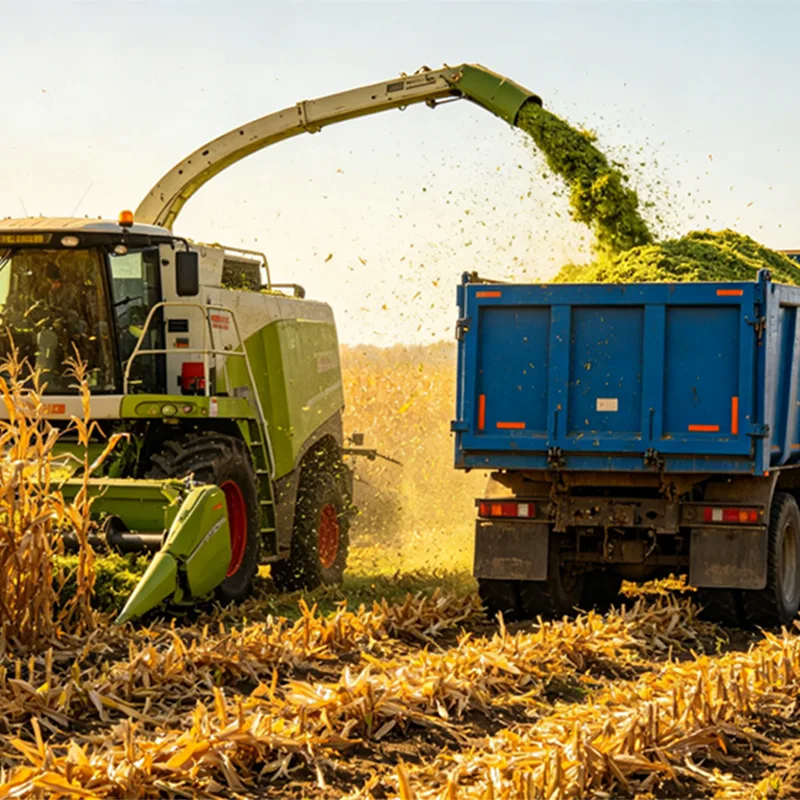
- Advanced equipment (CLAAS harvesters for silage; modern vegetable planters and harvesters for cabbage)
- Traceability from field to net bag
For round cabbage specifically, the process is:
1. Harvest – Manual or machine cut at optimal maturity (head firm, weight 0.8–2.0 kg).
2. Field trimming – Outer damaged leaves removed, stem cut flat.
3. Pre-cooling – Forced-air cooling to 2°C within 4 hours.
4. Grading – Electronic sorter or manual check for diameter and defects.
5. Net bagging – Food-grade net roll loaded on semi-automatic bagger; clip closure.
6. Palletizing – Stacked on ventilated pallets, stretch wrapped only at base.
7. Cold storage – Held at 1–2°C until dispatch.
This consistent protocol yields Net Bag Packed Round Cabbage that arrives at retail distribution centres with less than 2% shrivel or yellowing, even after 7 days in transit.
Conclusion – A Simple Packing Change with Measurable Impact.
So, is Net Bag Packed Round Cabbage the key to better product visibility and faster turnover? The evidence from retail floor metrics, logistics efficiency, and product shelf life suggests a strong "yes." While no single packaging type solves every challenge, net bags uniquely address the two biggest pain points for cabbage: invisibility on shelves and moisture-related waste.
For produce buyers, quality assurance teams, and retail category managers, evaluating net bag options should include examining supplier consistency, bag material specifications, and cold chain integration. Hebei Yiman Agricultural Technology Co., Ltd. offers one reference point – a 5-year-old company with traceable field practices and a growing reputation in both silage and fresh vegetables.
When your goal is to move round cabbage faster while keeping it fresher, Net Bag Packed Round Cabbage deserves a prominent place in your packaging strategy.
Related News
- How Can China High Energy Mixed Silage Feed Cut Farming Costs and Boost Livestock Growth?
- How Does High Moisture Fresh Corn Silage Improve Modern Livestock Feeding?
- How Can New Crop Fresh Whole Plant Corn Silage Improve Modern Livestock Feeding Efficiency?
- Why Is Mixed Silage Feed Essential for Modern Livestock Farming?
- Why Is Seasonal Corn Silage Essential for Modern Livestock Farming?
- Why Does Baled Whole Plant Corn Silage Matter for Modern Livestock Feeding Efficiency?
Leave me a message